

Sand Casting
Large components in medium volumes



For medium prototype and production volumes, sand casting enables us to manufacture larger aluminium and magnesium components cost-effectively. The process is based on relatively simple tooling, making it an attractive solution for larger geometries and medium-volume requirements.
Advanced sand casting technologies allow us to produce complex designs and thin-walled parts with a high degree of design freedom. For larger components where die casting tooling would be too costly or impractical, sand casting provides a flexible and cost-effective manufacturing route. Advanced moulding and core technologies enable complex geometries, intricate internal features and thin-walled designs, while maintaining a high degree of design freedom. The same manufacturing process can be used from initial prototypes through pre-series and medium-volume production, providing a smooth transition as projects mature. Combined with CNC machining, sand cast components can be finished to meet the required dimensional tolerances and functional requirements.
Prototypes
For prototype and pre-series production, sand casting can often be based on simple tooling and flexible moulding methods. This keeps initial costs low and allows design changes to be implemented quickly during development.
Series
For recurring production, tooling and moulding methods can be optimised to support higher volumes and improved repeatability. The manufacturing setup is tailored to the component geometry and expected production volume.
Complete workflow from casting to finished component
We deliver an integrated process combining sand casting with advanced CNC machining. This enables the cost-effective production of large and complex components while maintaining flexibility from prototype development through medium-volume production. Depending on component geometry, complexity and volume requirements, the moulding process can be adapted to balance tooling investment, lead time and manufacturing efficiency.
With in-house post-processing on 20 high-precision CNC machines, cast components can be machined to meet functional requirements and specified tolerances. The result is a streamlined end-to-end workflow that provides full control over quality and supports a seamless transition from prototype and pre-series production to recurring manufacture.
Scale your production with confidence
From early prototypes to larger quantities, sand casting offers a flexible and scalable manufacturing process. We help you balance tooling investment, lead times and production efficiency based on the specific requirements of your component.
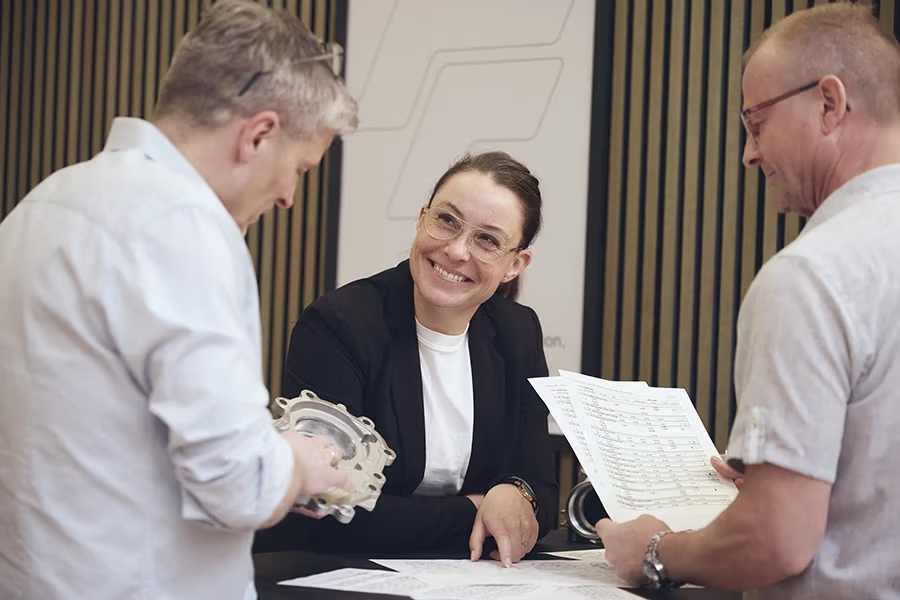
Reliable quick quoting
We review your specifications and provide fast technical feedback on aluminium and magnesium casting projects. Quotations are typically delivered within a few days for urgent development needs, ensuring a fast and informed start to your project.
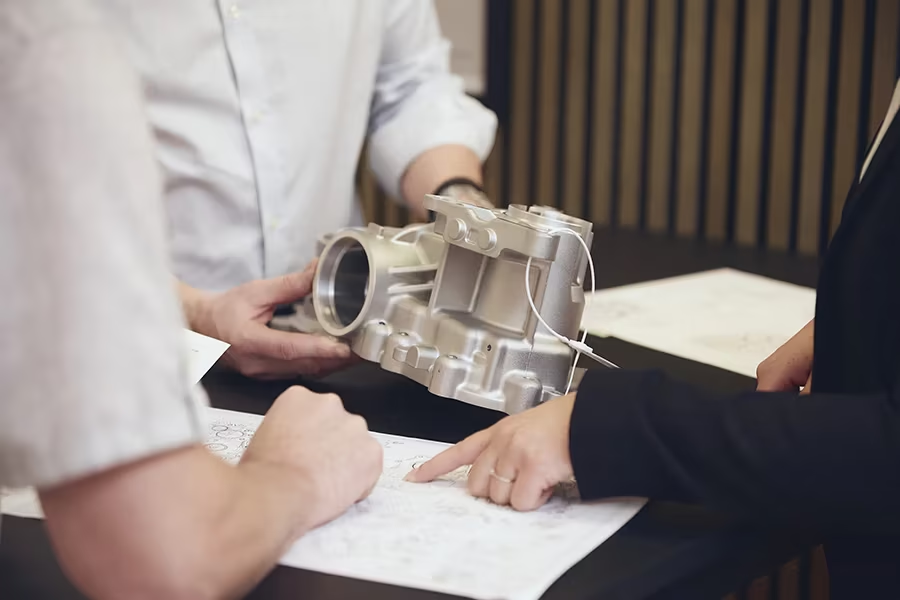
Technical expert guidance
Early-stage engineering support ensures the right design decisions before production begins. We provide input on manufacturability, material selection and process optimisation, helping you reduce risk and improve performance in both aluminium and magnesium applications.
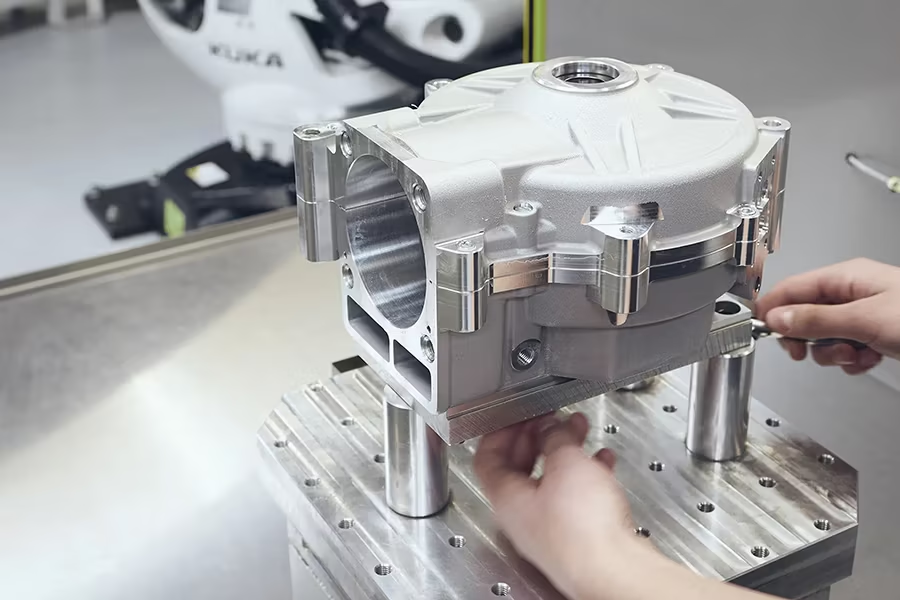
Material and application expertise
Aluminium and magnesium each offer distinct performance advantages depending on application needs. From lightweight structural components to high-strength and thermally efficient parts, we help you select the right material and design strategy for optimal performance.

CNC post-machining of castings
We provide specialised machining of aluminium and magnesium cast components, primarily for prototypes and small series. Probing technology ensures precise alignment and optimal fit before machining, securing consistent and reliable results.
Measuring and documentation
We offer in-house measurement and documentation after machining to verify dimensional accuracy and quality. This ensures full traceability and confidence that components meet specification and performance requirements.
We’re here to help you move forward
Submit your project details and receive expert guidance from our team of technical experts. We know that clarification is a key part of keeping momentum.

Standard Alloys


Additional services
Optimisation of your design for manufacturability, and cost-efficient production.
Controlled thermal processes to achieve required mechanical properties.
High-precision machining for tight tolerances and critical dimensions.
Permanent, high-precision part marking for identification and traceability.
Welding process for leak-tight structures and integrated cooling channels.
Air pressure testing to verify and document leak-tightness of components.
Optional sealing of porosity to improve component tightness.
Final cleaning of components prior to packaging and shipment.
Surface finishing such as Surtec 650, anodizing, or painting.
CMM measurement reports for dimensional verification and quality documentation.
Non-destructive inspection methods for internal defect detection and full 3D validation of component integrity.
Assembly of components and subassemblies according to customer specifications.
Tailored solutions built on deep sector understanding
We combine technical expertise, industry standards, and market insight to create value-driven solutions. Through sector-specific advisory and proven experience, we help you gain competitive advantage where it matters most.

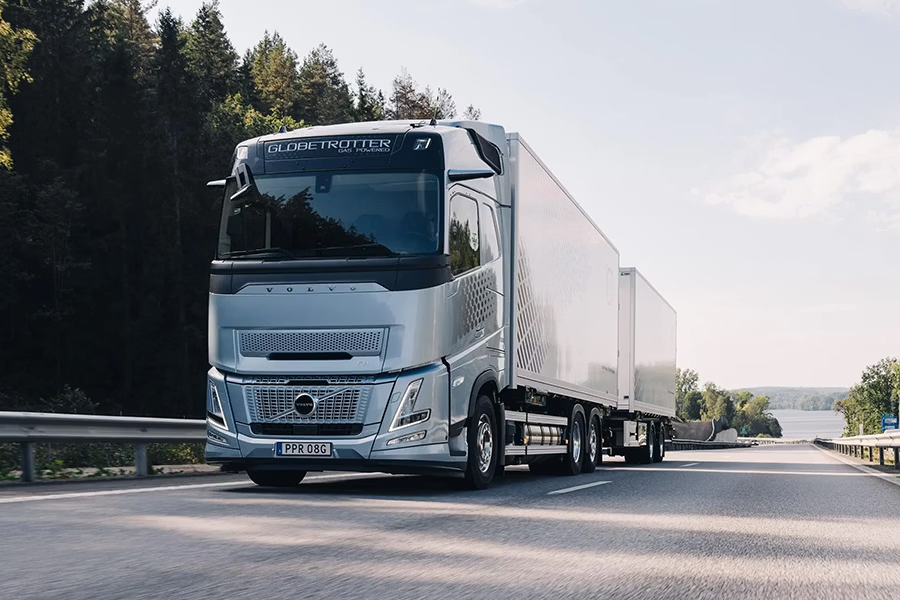

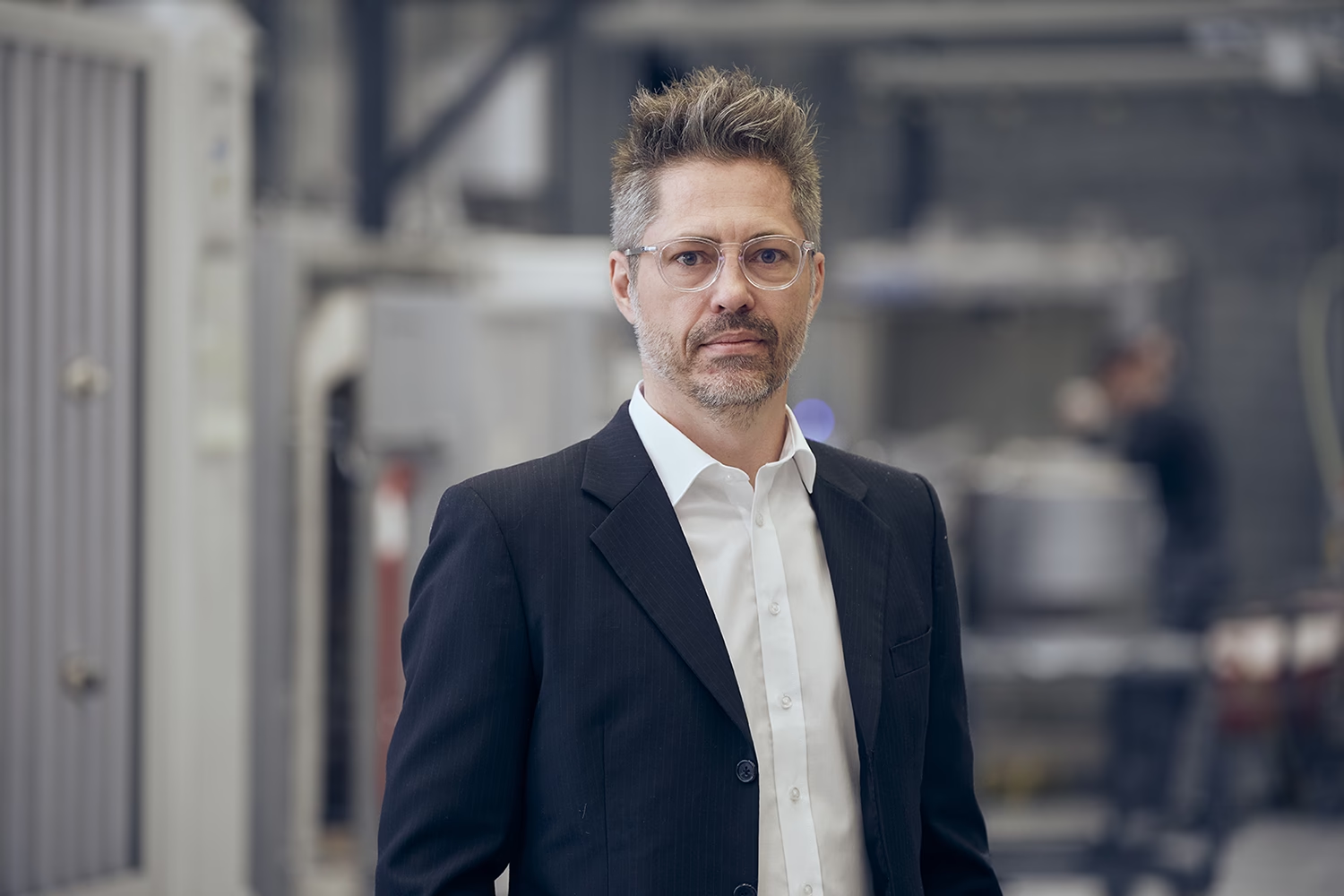
"We create clarity from the start and never compromise on understanding what is needed. We keep our eyes on the process, speak honestly, and continue until the solution is usable and delivered — without exception."
Martin Løgsted, COO
Great solutions come from asking questions
Our FAQ covers common questions, but not everything. Reach out if you need more detailed answers.
The achievable wall thickness depends on the selected sand casting technology as well as the component geometry, flow length and overall design. For some applications, local wall thicknesses around 1.5 mm can be achieved, while other components may require thicker sections to ensure proper mould filling and casting quality. Each design is evaluated individually.
Delivery time depends on component geometry, quantity and the selected tooling and moulding solution. In a fast-track setup, first castings can typically be ready within 3–6 weeks. We assess each project individually and provide realistic lead times as part of the quotation process.
Sand casting is a cost-effective manufacturing process for larger and more complex components, particularly in prototype, pre-series and medium-volume production. Compared to permanent tooling processes, sand casting offers lower tooling investment, greater design flexibility and the possibility to adapt tooling and moulding methods as project requirements evolve. Advanced sand casting technologies also enable complex geometries, internal features and thin-walled sections.
Simply upload your CAD data and any available drawings or specifications. A brief description of your project is sufficient. Our engineering team will review the information and provide technical feedback together with a quotation.
Yes. We offer both CNC post-machining and quality inspection reports as part of the delivery. CNC machining, and dimensional inspection can be handled in-house, ensuring consistent quality, short communication paths, and reliable delivery times.
To provide an accurate quotation, we typically need a 3D CAD model, STEP format preferred, and technical drawings if available. Additional information such as material and alloy, quantities, and further requirements helps ensure a fast and precise quotation.
We’re here to help you move forward
Submit your project details and receive expert guidance from our team of technical experts. We know that clarification is a key part of keeping momentum.