

Magnesium Machining
Gain manufacturing flexibility with precision magnesium machining



Magnesium machining enables the production of lightweight, high-precision components with excellent dimensional accuracy and material efficiency.
Using advanced CNC machining technologies, complex magnesium parts can be manufactured directly from solid material, providing exceptional flexibility for prototypes, pre-series components, and low-volume production.
Magnesium is one of the lightest structural metals available, making it an attractive choice for applications where reducing weight can improve efficiency, performance, and handling characteristics. Combined with its excellent machinability, magnesium allows intricate features, tight tolerances, and complex geometries to be produced with a high degree of precision.
Combining engineering expertise with advanced manufacturing, we support customers throughout the entire development process, from prototype manufacturing and design validation to low and medium volume production. Through engineering expertise, advanced CNC machining capabilities, and rigorous quality control, we deliver magnesium components tailored to demanding technical and industrial applications.
Consistent quality is essential in precision machining. We focus on dimensional accuracy, repeatable manufacturing processes, and material integrity throughout production. Combined with comprehensive inspection procedures and optional secondary operations, this ensures reliable component performance and compliance with application-specific requirements.
Quality assurance and traceability
We integrate quality control throughout our magnesium machining workflow, supported by structured inspections and full component traceability across materials, machining operations, and final verification. This helps ensure consistent quality from prototype development to repeat production.
ISO-Certified Quality Management
We operate under ISO-certified quality management systems and apply proven manufacturing processes to ensure consistent quality, reliable communication and dependable project execution throughout the development and production cycle.
What is magnesium machining especially suitable for?
Magnesium machining is ideal for applications that require lightweight components, tight tolerances, and design flexibility. CNC machining allows complex geometries to be produced directly from magnesium billets, making it particularly suitable for prototypes, functional testing, and low-volume production where tooling investments are not required.
The process is widely used for precision housings, lightweight structural components, aerospace parts, robotics applications, and electronic enclosures. Thanks to magnesium’s low density and excellent machinability, manufacturers can reduce component weight while maintaining the accuracy and performance required for demanding applications.
Accelerate development with precision magnesium machining
Magnesium machining transforms lightweight material into highly precise components through a controlled CNC manufacturing process. By removing material from solid magnesium stock, complex features, tight tolerances, and intricate geometries can be produced without the need for dedicated tooling.
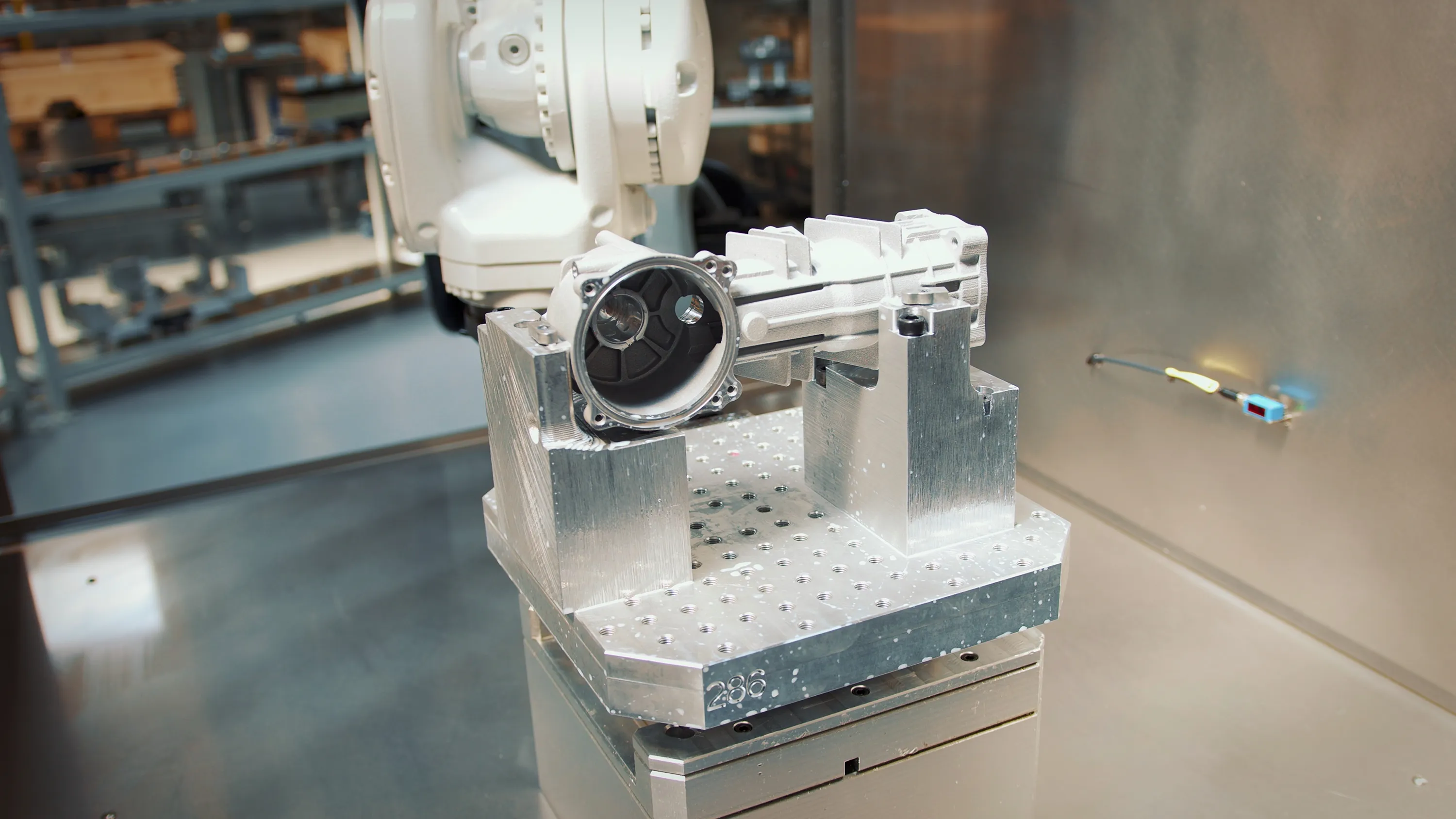
1. Material selection
The process begins with selecting the appropriate magnesium grade based on performance, weight, and application requirements. Choosing the right material is essential for achieving the desired mechanical properties, dimensional accuracy, and machining performance.
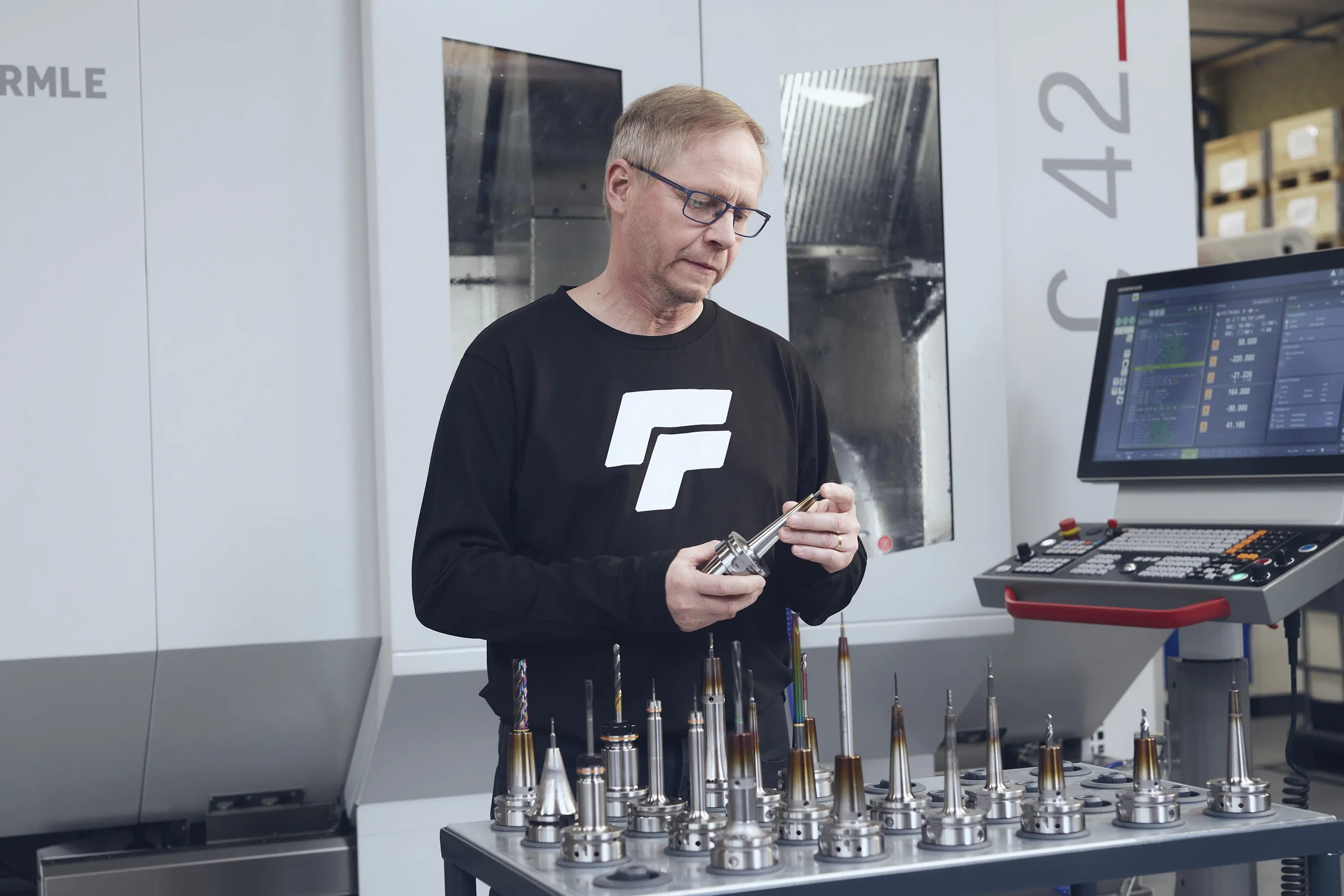
2. CNC machining operations
Advanced CNC equipment removes material with exceptional precision, enabling detailed features, complex geometries, and critical interfaces to be manufactured efficiently. Magnesium's excellent machinability allows for high cutting speeds and efficient material removal.
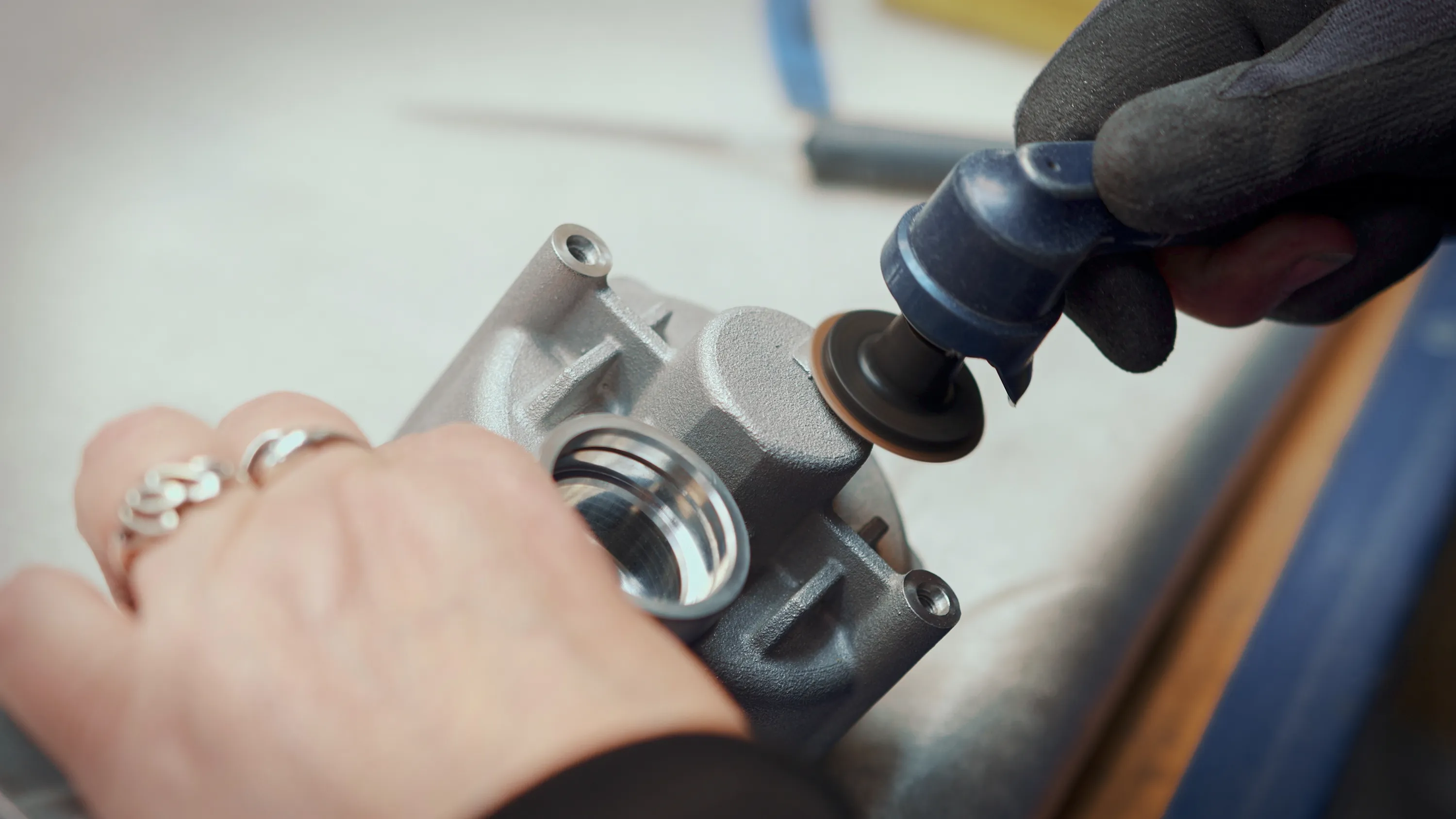
3. Finishing and refinement
Depending on application requirements, machined components may undergo deburring, surface treatment, or additional finishing operations. This helps achieve the required surface quality and functional characteristics.
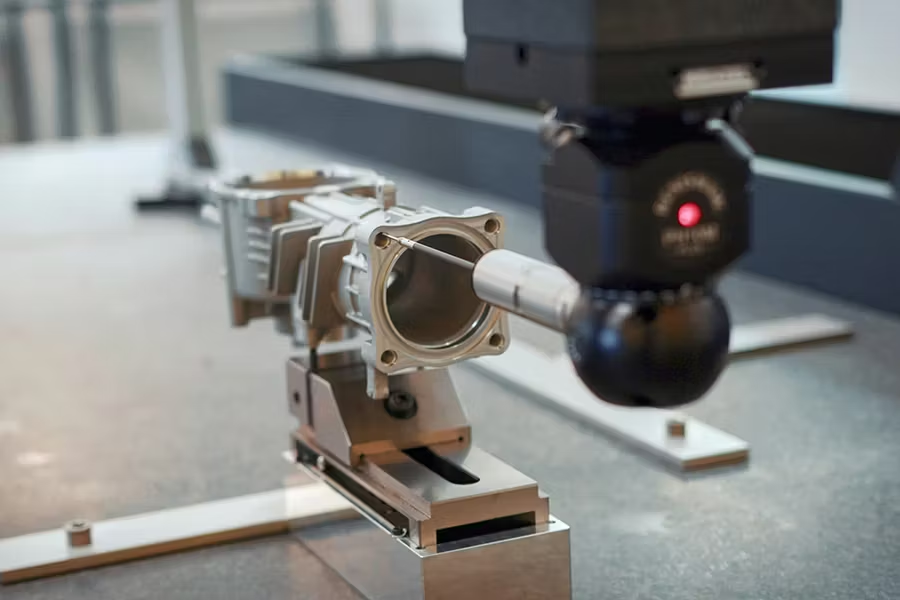
4. Inspection and verification
Components are inspected according to agreed quality requirements and inspection plans. Verification activities help ensure that critical tolerances, geometries, and performance criteria are consistently achieved.
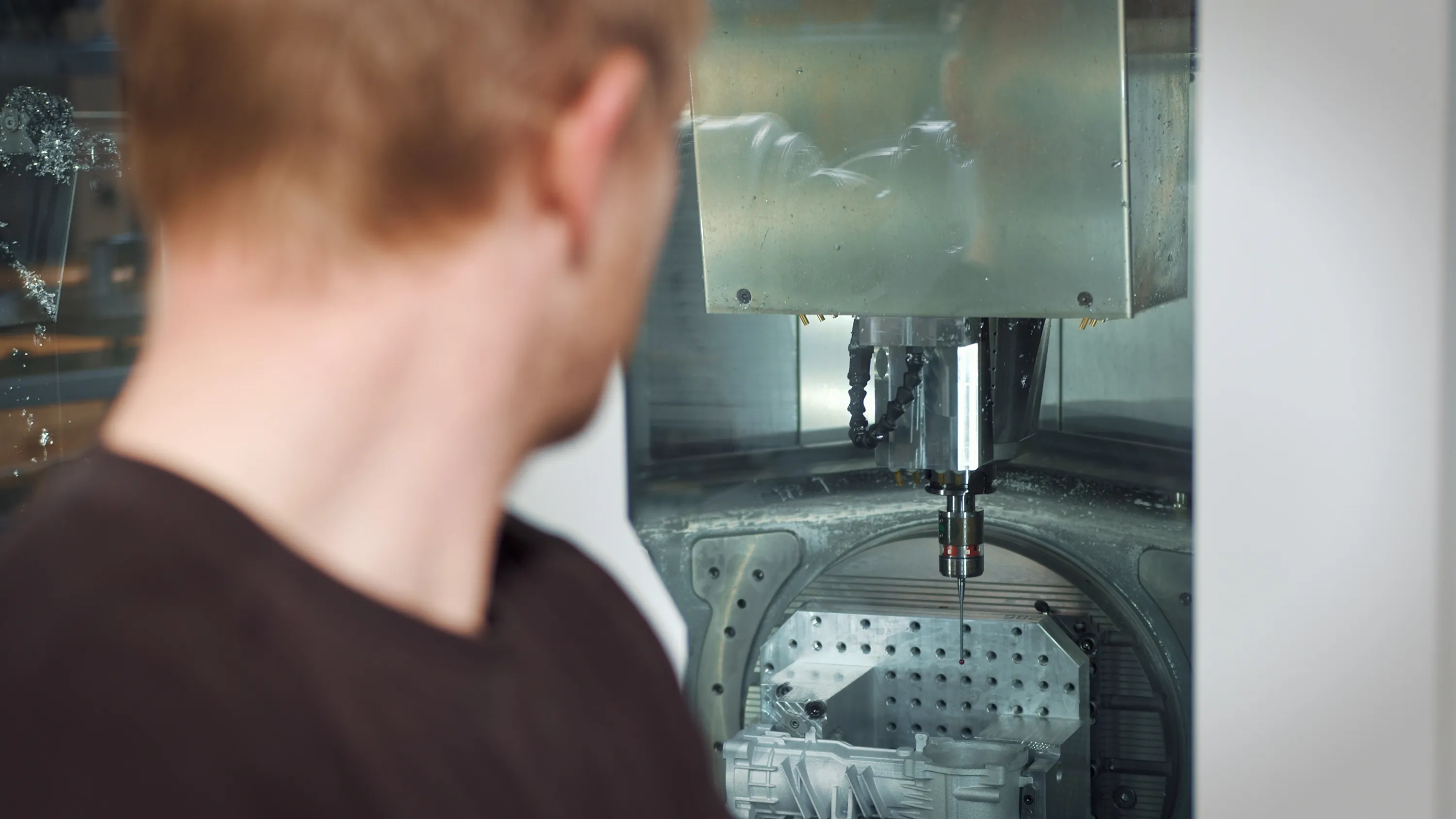
Why magnesium is ideal for machining
Magnesium combines low density with excellent machinability, making it particularly attractive for lightweight components requiring high precision. Its material properties allow complex parts to be manufactured efficiently while maintaining excellent strength-to-weight performance.
We’re here to help you move forward
Submit your project details and receive expert guidance from our team of technical experts. We know that clarification is a key part of keeping momentum.

Standard Alloys
Successful magnesium machining starts with precision-focused engineering
Our engineering team helps optimize designs for efficient machining, reduced production costs, and improved manufacturability. Early collaboration helps identify opportunities to simplify production while maintaining critical performance requirements.
_00002.png.avif)
Feature accessibility
Components should be designed to allow efficient tool access throughout the machining process. Improved accessibility reduces machining complexity, shortens cycle times, and supports more consistent results.
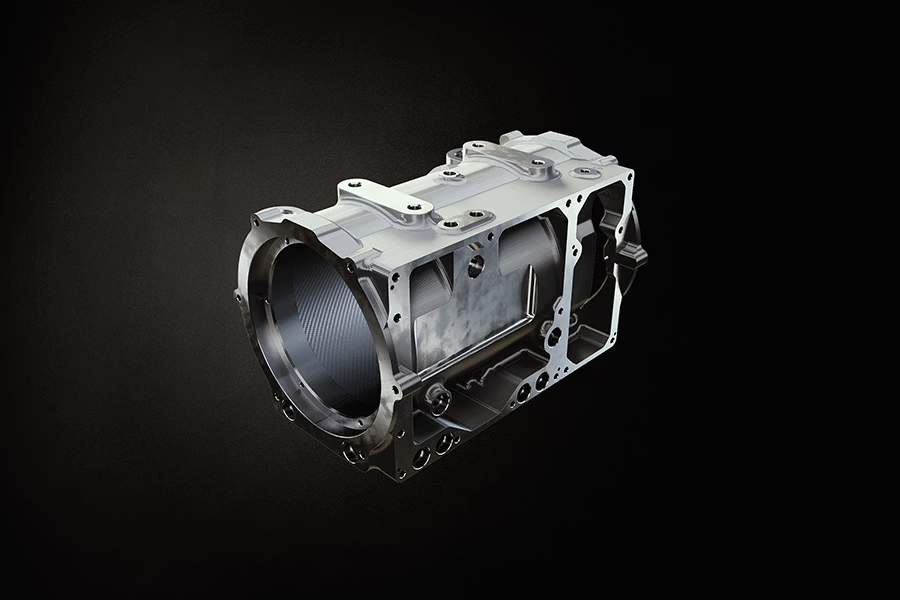
Wall thickness considerations
Extremely thin sections can increase machining complexity and affect dimensional stability. Optimized wall thickness helps balance lightweight design objectives with reliable manufacturability.
_00006.png.avif)
Tolerance planning
Critical tolerances should be applied where they create functional value. This helps avoid unnecessary machining operations while ensuring required performance and assembly characteristics.
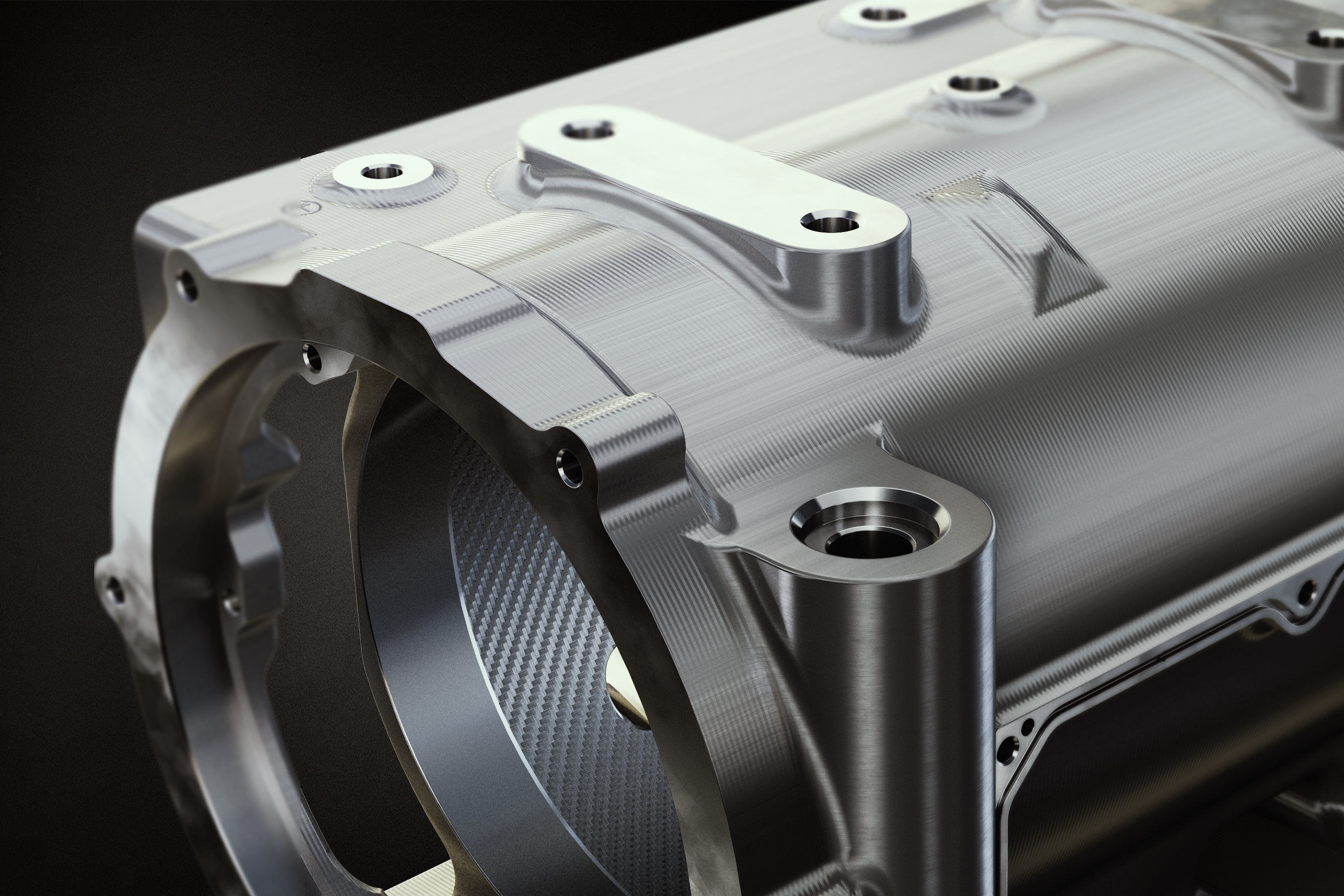
Geometry optimization
Simplifying complex features where possible can improve machining efficiency and reduce production costs. Well-designed geometries also contribute to more predictable manufacturing outcomes.


Advantages of Magnesium Machining
Magnesium machines faster than many engineering metals, enabling efficient production and shorter machining cycles.
Magnesium is one of the lightest structural metals available, helping reduce overall component weight without compromising functionality.
CNC machining enables highly accurate components with repeatable quality and precise dimensional control.
Complex components can be produced directly from CAD data without the need for dedicated casting or mould tooling.
Design iterations can be manufactured quickly, supporting accelerated product development and validation.
Advanced CNC machining enables intricate details and precision features that would be difficult to achieve using alternative manufacturing methods.
Eliminating tooling requirements can significantly shorten development and production timelines.
Machined magnesium components can achieve high-quality surface characteristics.
Tailored solutions built on deep sector understanding
We combine technical expertise, industry standards, and market insight to create value-driven solutions. Through sector-specific advisory and proven experience, we help you gain competitive advantage where it matters most.

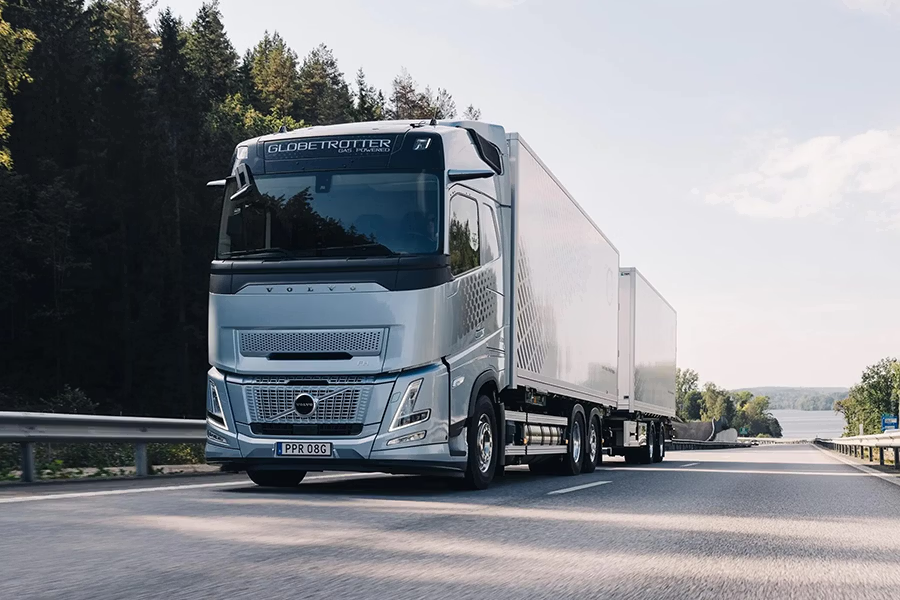


“Successful product development depends on the ability to move quickly from design to functional validation. Magnesium machining provides the flexibility and precision needed to refine designs, validate performance, and accelerate development before larger production commitments are made.”
Dan Nielsen, Sales Director
Great solutions come from asking questions
Our FAQ covers common questions, but not everything. Reach out if you need more detailed answers.
Simply upload your CAD data and any available drawings or specifications. A brief description of your project is sufficient. Our engineering team will review the information and provide technical feedback together with a quotation.
Magnesium machining is widely used in aerospace, automotive, robotics, electronics, defence, medical technology, and industrial equipment manufacturing. These industries often benefit from magnesium's lightweight properties, precision machining capabilities, and ability to support high-performance applications.
Yes. Magnesium can be machined safely when proper manufacturing procedures and process controls are followed. Professional machining environments use dedicated equipment, chip management, and safety protocols specifically designed for magnesium processing.
Yes. Modern CNC machining technologies can produce highly complex features, intricate details, and critical interfaces with excellent precision. This makes magnesium machining suitable for demanding technical applications that require both lightweight performance and geometric complexity.
Magnesium machining is often the preferred choice when tight tolerances, rapid design iterations, and tooling-free production are required. It is particularly effective for prototypes, functional testing, and low-volume manufacturing where flexibility and development speed are important.
Both materials can be machined with high precision, but magnesium is significantly lighter than aluminium and generally offers faster machining speeds. Aluminium may be preferred when thermal conductivity or corrosion resistance are primary requirements, while magnesium is often selected when minimizing weight is the main objective.
Magnesium machining removes material from solid stock using CNC equipment, while magnesium die casting forms components by injecting molten magnesium into a mould. Machining offers greater flexibility and is ideal for prototypes and low-volume production, whereas die casting is generally more cost-effective for larger production volumes.
Yes. Magnesium machining is an excellent choice for prototype development because components can be produced directly from CAD data without tooling investments. This allows designs to be validated, tested, and refined quickly before production decisions are made.
Magnesium machining is particularly well suited for prototypes, pre-series components, and low to medium volume production. Typical quantities range from single prototype parts to several thousand units, depending on component complexity and project requirements.
We typically deliver machined magnesium components within 2–8 weeks, depending on complexity, quantity, material availability, and post-processing requirements. Contact us to discuss your project timeline and specific manufacturing needs.
Commonly machined magnesium grades include AZ31B, AZ61A, and AZ80A. Material selection depends on factors such as strength requirements, corrosion resistance, machinability, and the intended application.
Magnesium machining can achieve very tight tolerances depending on component geometry, machining strategy, and application requirements. CNC machining is particularly well suited for components that require precise dimensions, critical interfaces, and consistent repeatability.
Key advantages include exceptional machinability, lightweight performance, tight tolerances, rapid prototyping capability, and the ability to manufacture complex geometries without dedicated tooling. This makes magnesium machining particularly attractive for development projects and low-volume production.
Magnesium offers an excellent combination of low weight, good mechanical properties, and outstanding machinability. Compared to many other engineering metals, it can be machined efficiently while helping reduce overall component weight and improving product performance.
Magnesium machining is used to manufacture lightweight, high-precision components for industries where weight reduction, dimensional accuracy, and design flexibility are important. Common applications include aerospace components, robotics, electronics housings, automotive parts, and industrial equipment.
We’re here to help you move forward
Submit your project details and receive expert guidance from our team of technical experts. We know that clarification is a key part of keeping momentum.